
Featured photo by James Ertl on Unsplash – Can you find one like this? Yes you can!
The Treasure from the Stars
The vast wilderness of Northeastern Ontario isn’t just a rugged landscape of forests and lakes—it’s a potential treasure trove of materials from the cosmos. Every year, space debris pelts Earth, and some of it makes it to the ground as meteorites. For would-be hunters, this region offers a unique and largely unexplored opportunity. Get ready to tie up your hiking boots, grab a magnet and have a discerning eye; the thrill of finding a piece of cosmic history awaits!
Note: Stay inside 1 kilometer on either side of the trajectory line. (that’s 2 kilometers total width). See the trajectory line on the map on the Home page.
The Hunt: What to Look for in the Boreal Forest
Chondrites and achondrites – chondrites have chondrules which are spherical mineral deposits (1mm to 4mm) throughout the rock (chondrules are not found in earth rocks) and the potential achondrites of this area have a plain basalt-like matrix with no chondrules. These potential achondrites attract a small strong magnet and leave no streak or a faint gray streak when scratched on the white back of a ceramic tile. The chondrites and achondrites would originate from asteroids located in the main belt between Mars and Jupiter. In the world there has never been a multi-ton stony chondrite or achondrite located but this area has been through a historical floods giving a multi-ton meteorite the chance to survive the fall.
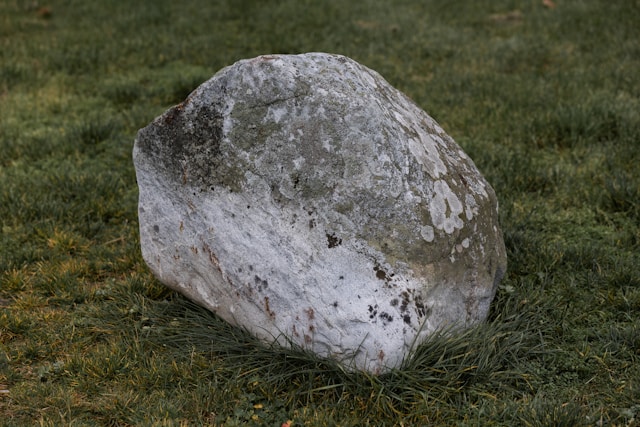
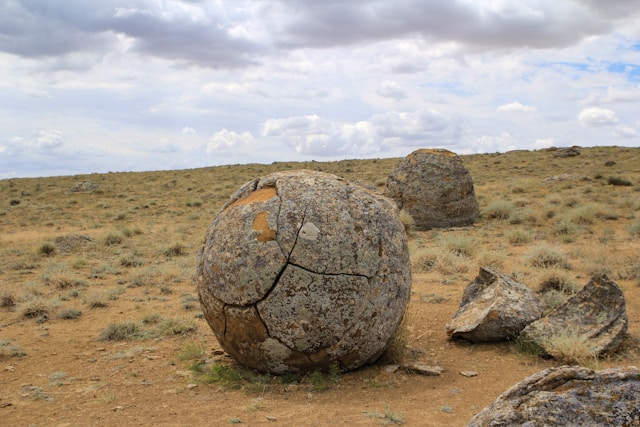
When searching, learn to recognize the distinctive signs of a meteorite. (Above photo by Carl Tronders on Unsplash) Round or like the triangular shape of a space capsule. Their outer surfaces often feature a weathered fusion crust that has transformed to a bluish-gray color. This crust can be lumpy and bumpy, sometimes with deep thumbprint-like indentations called Regmaglypts. Some well-preserved specimens even display classic raised lines running around them, a classic meteorite feature. Photo below by Shridhar Dixit on Unsplash
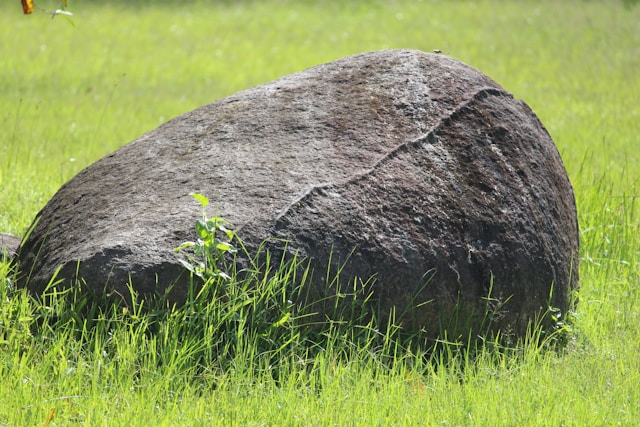
Rocks like the one below are around and they tend to be more of a bluish-gray colour. Also, look for tiny specks of metal (nickel and iron) embedded in the fine-grained matrix, which makes the rock magnetic—a small, strong magnet will easily confirm this key characteristic. Photo below by Antonino Billarde on Unsplash
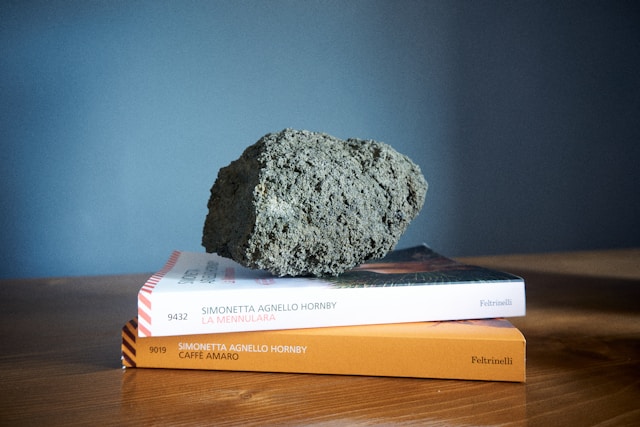
Other things to look for are rocks that have this colour (below) and contain chondrules millimeter sized circular mineral deposits within the matrix. These may or may not be attracted to a small strong magnet. Photo by Ivo Raeber on Unsplash
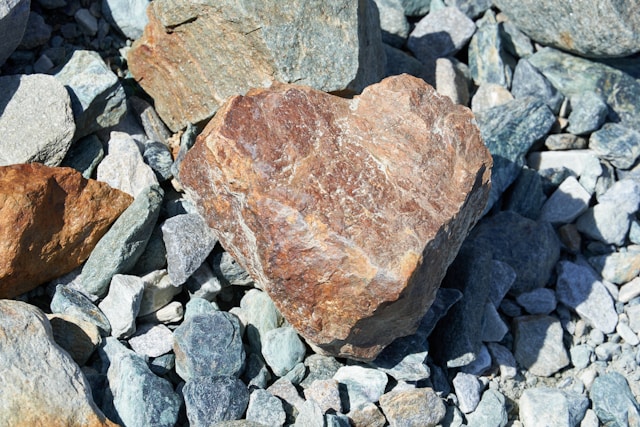
But the rock might look like this when you find it. (below) Photo by Adolfo Félix on Unsplash
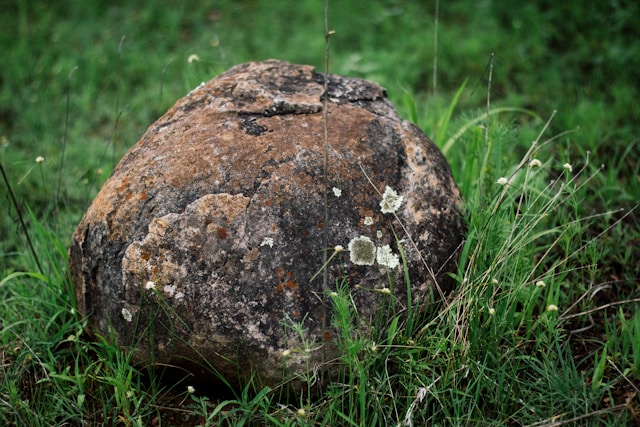
Another thing to search for are crescent shaped fragments that have fallen off the specimen (like below) even lodged into the ground beside the specimen. These may or may not be attracted to a small strong magnet. They may also look like a white granite. Check out online what aubrite meteorites can look like. Photo by Gwangjin Go on Unsplash
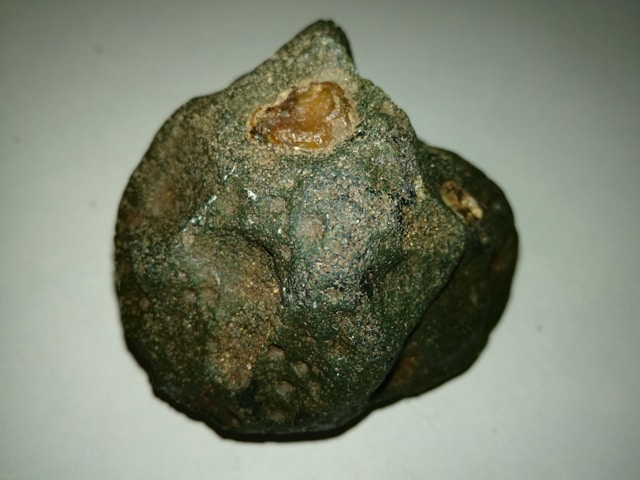
Another striking specimen may have a green tinge colour (like below but darker green) in sunlight. Careful inspection may reveal visible chondrules. The chondrules can appear like a bunch of blotches on the irregular surface. These may or may not be attracted to a small strong magnet. (Photo by Mr. J. Pavan on Unsplash)
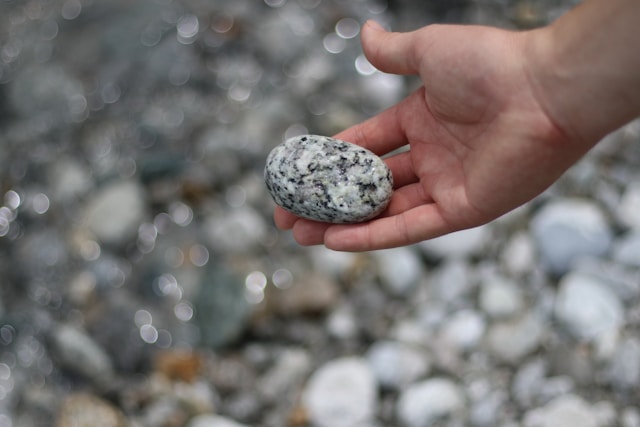
What may appear like a plain granite just might be a meteorite like the one below. Again, check out online what aubrite meteorites look like. (Photo by Astrid Schaffner on Unsplash) Note, a small strong magnet will not stick to these.
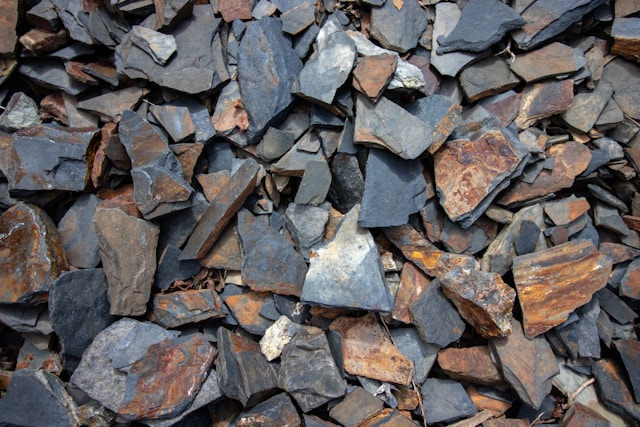
Yet another observation are oval shaped rocks and a darker gray color (it may even appear a bit burned). If you have ever held a piece of ferrite in your hand and listen to it as you manipulate it with your fingers (very high pitched sound). The matrix is darker gray – very plain and sparse metal flecks and does not stick to a small strong magnet. The plain gray matrix resembles many of the pieces below in this photo by Anthony Mucci on Unsplash. Note, a small strong magnet will not stick to these either.
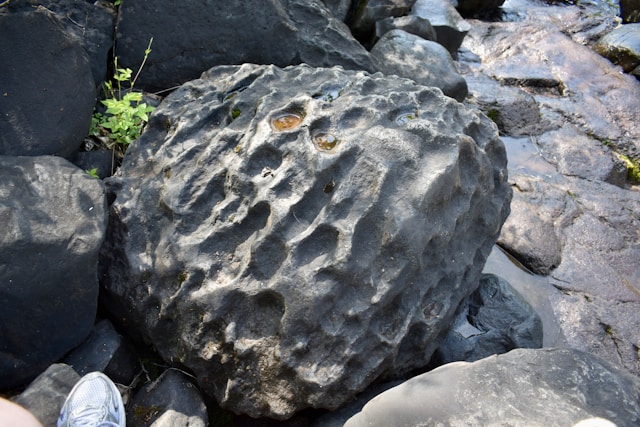
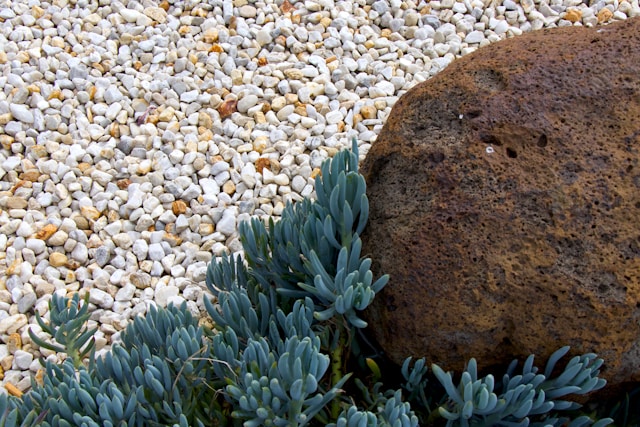
Yet another observation are rocks that have vesicles like the one below. Photo by Mitchell Luo on Unsplash. Be careful as there are some volcanic rocks in the region that look exactly like this, attracts a small strong magnet and leaves no streak when scratched on plain ceramic – like the white back of a ceramic tile. Very tricky! The key is the potential meteorite may have vesicles around the entire rock and NOT broken away from the bedrock.
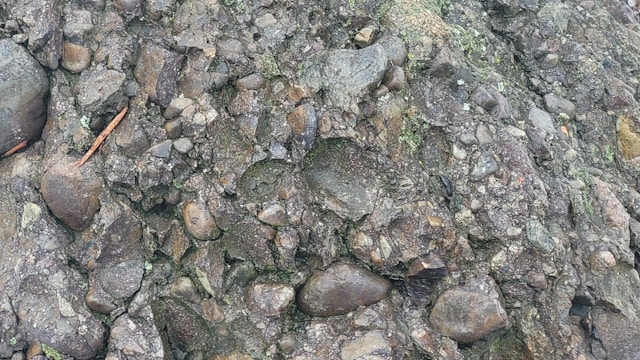
Another thing to watch for are the abundant boulders of conglomerate. This volcanic rock is often angular or broken and has inclusions of rounded rocks as in the photo below (Photo by Shiola Odan on Unsplash). The conglomerates of the region are darker grey or even a darker greenish gray and you may only see 1 or 2 inclusions but that is enough to identify it as conglomerate. These boulders had been carried in by the last ice age (12,000 years ago) but the potential meteorites were not, indicating that the meteorite fall would have been more recent, possibly 3,000 years ago. The conglomerate boulders often have excessive moss cover as opposed to the potential meteorites which have less.
Your Cosmic Destiny Awaits
Imagine being the one to find a piece of the cosmos, a journey completed after millions of years! Northeastern Ontario is calling to those with a keen eye and a curious spirit. From the distinct blue-gray crust to the metallic pull of your magnet, to scratching a sample across the white back of a ceramic tile revealing a gray or no streak but not reddish or brown the clues are out there waiting to be found. Don’t just admire the night sky—explore the ground beneath your feet and connect with a piece of space history. The next great discovery is waiting for you to make it!
Wrap your head around this one. If you find a chondrite, this rock is older than planet earth!